
Engineering workflow design
Map technical tasks, dependencies and handoffs across disciplines.
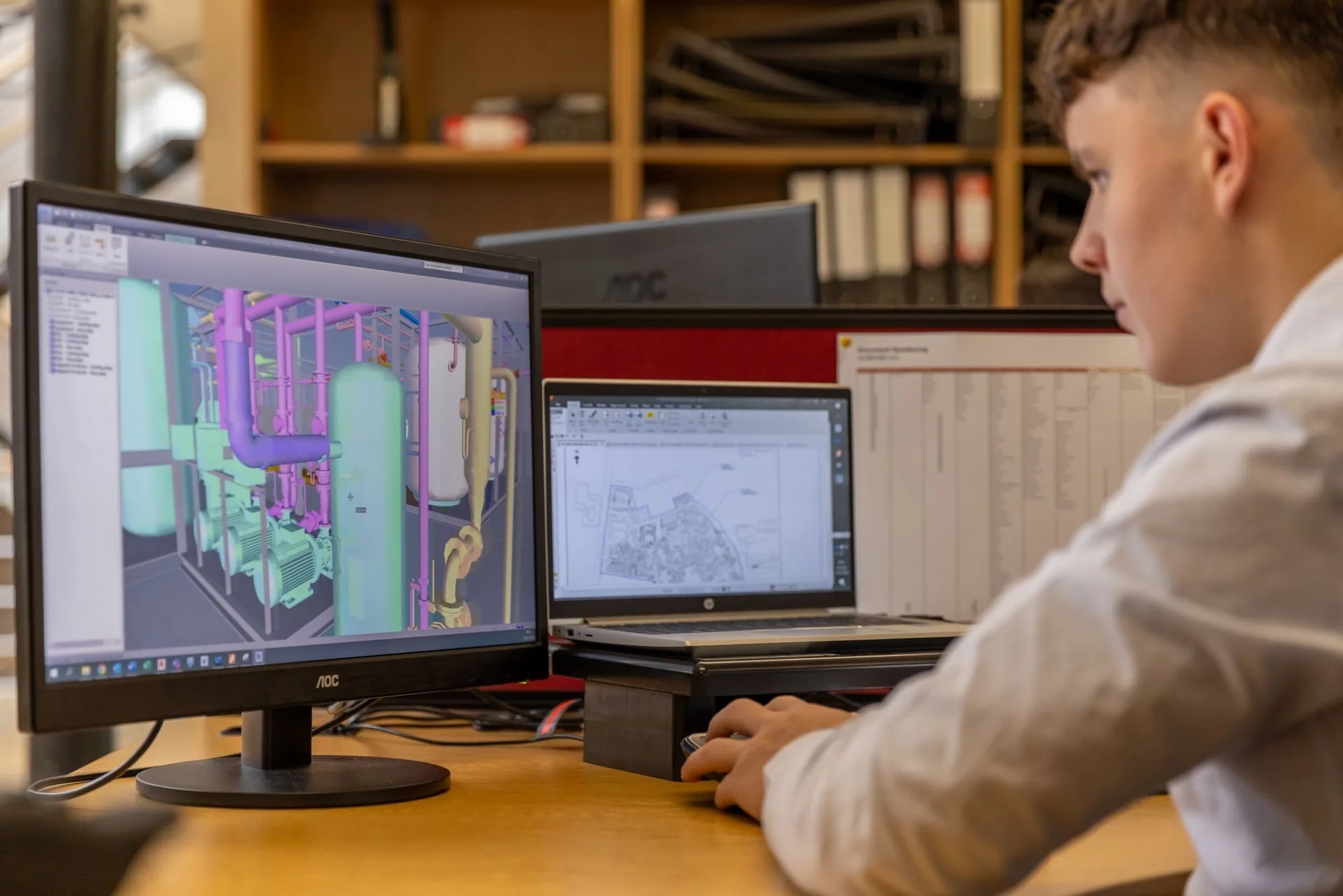
Connect engineering services, technical information and product workflows with the data and systems people need to make well-informed decisions.
Discuss your project
Requirements, design evidence and technical decisions sit across disciplines and tools. Teams need that context to travel with the work through design, integration and review.
Connect technical requirements, electronics, software and validation. Keep engineering decisions attached to the product context throughout delivery.
Requirements & constraints
Hardware and system architecture
Firmware, edge & applications
Reviews, tests & traceability
Modular solution areas, tailored to your environment and the business challenge.
Map technical tasks, dependencies and handoffs across disciplines.
Connect supported engineering tools using documented interfaces.
Organize approved documentation for context-aware discovery.
Align embedded, edge, cloud and application requirements.
Introduce appropriate checkpoints for design and operational decisions.
Surface relevant project and engineering status through shared views.

Identify the data, interfaces, constraints and outcomes that matter. Shape the solution around the actual requirement.
Discuss this capabilityPotential opportunities for applying this capability, shaped by the systems, access, and data available.
Connect design context with implementation work.
Bring equipment information into engineering workflows.
Coordinate documentation, reviews and issue resolution.
Share requirements across hardware and software.
Attach design knowledge to the delivery workflow.
Make checkpoints and validation evidence visible.
A disciplined delivery approach, shaped around your environment and the outcomes that matter.
Understand the business context, users, systems and real constraints.
Choose the right data flows, controls, interfaces and technical foundations.
Develop iteratively, test assumptions and integrate the moving parts.
Measure outcomes, improve reliability and plan the next iteration.
The technology choices depend on the environment, constraints, and measurable objectives.
Capabilities are solution areas. Delivery stacks and commercial commitments are confirmed during project scoping.
Manufacturing, fabrication and component sourcing require separate project scoping.
The approach prioritizes supported integrations with existing tools, subject to their interfaces and permissions.
Discovery identifies the operational challenge, users, technical constraints and a focused first delivery.